CRY MINAMI


Mechanical Brides / Cry Minami

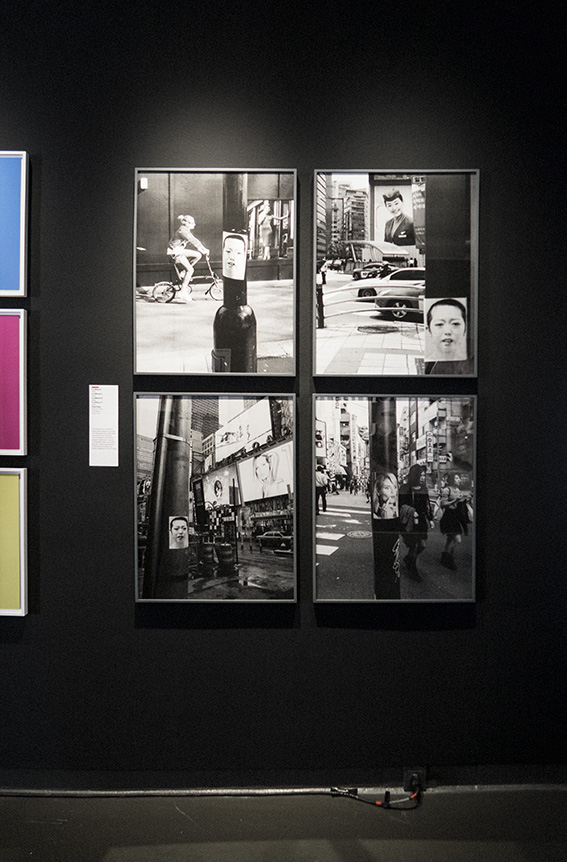
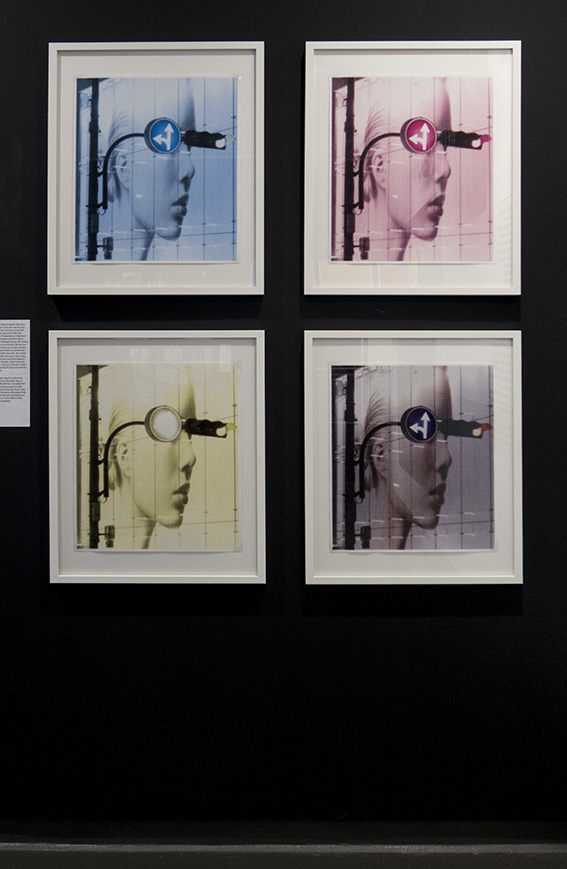
The title of series ‹Mechanical Brides› refers to an early book by Marshall McLuhan with the same title. It deals with questions about newspapers, comics, and advertisements and also reflects the role of women in popular culture. With the camera I was taking lots of photos from billboards showing portraits of women in Japan, America and Europe. These image are interesting as these models become role models for a lot of women. I worked on some of these images and produced stickers which I put back into the streets—to react on advertising companies putting into the streets and public spaces to claim back these spaces.

Cry Minami, 5 pigment prints, each 74   x   57   cm
Cry Alex/CryMinami, 2 two-channel videos, sound, loop

exhibited at:
2019 »Sequence as a Dialogue« Kunsthalle Gießen
2018 »Cry Minami« UNSEEN Amsterdam
2018 »Cry Minami« Talk- and Printshow, in)(between gallery Paris
2017 »Werbung« Stadtmuseum Düsseldorf
IMG_0489
IMG_0486

Katja Stuke, Cry Minami
3 Photo-Zines, 2016/2018
29,7 × 21 cm

»Some years ago Minami Minegishi, a singer of Japanese Idol-Band AKB48 got a some international media attention: she appeared on Japanese TV, crying with shaved hair — apologizing that she had a sexual affair with a young man. That seems to be agains her contract with the management of the group. The first image that came up in my mind was the image of shaved women in Europe after the second world war: women who had an affair with Geman soldiers where publicly punished this way. So even today shaving women’s hair seems to be an symbol of humiliation and power — and is used like this all over the world.
Another question that came up: was this her own idea or was ist just another marketing strategy? These questions let me use Minami‘s image as part of »Mechanical Brides«, a series I started in 2011 dealing with the image of women in media an advertising.
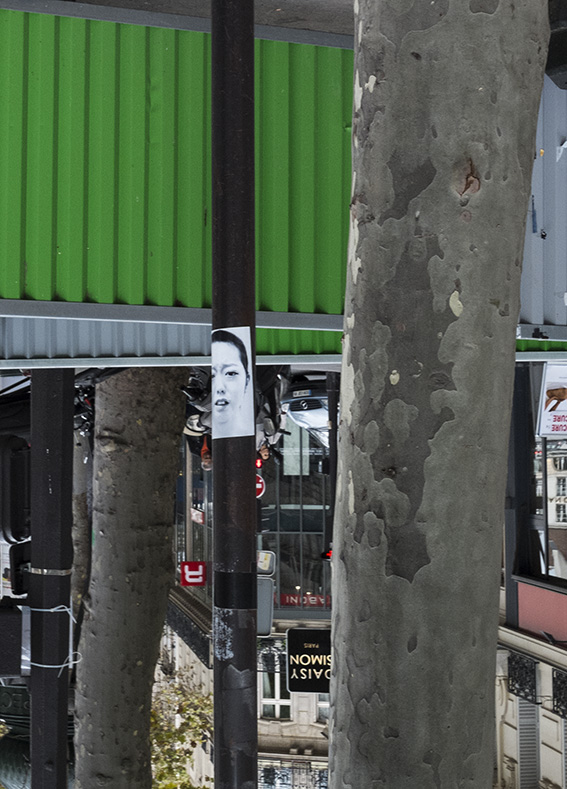
I also produced various stickers I pasted on the streets: on traffic lights or electrical boxes, post boxes, trash cans or power poles wherever we travelled: in Japan, all over Europe, the USA, in Hongkong, Korea or China. Preferably in commercial areas of big cities close to advertising images or advertising screens. But it could also be at the southernmost place in Africa or an abandoned alley in Sarajevo.

In 2015 during a residency at the Cité International des Beaux Arts in Paris I left some stickers in Marais next to fancy fashion stores, around Opéra near some of the Japanese shops in that area or other touristic parts of the city.
On Oct. 6th I got a message from a Japanese friend who told me that this was discussed on Twitter and several Japanese websites. A young woman had photographed one of the portraitstickers (something I do myself for the projectblog.
Some of her followers had commented on this, retweeted it. A well known music-publisher also retweeted it and all of a sudden more than 20.000 people shared it and almost 17.000 people liked it.
There where immediately some hateful comments (»this is agains Japan« or accusing and insulting Koreans) but other people asked the same questions like myself, some laughed about it, liked it a lot and some had unexpected ideas, connections and associations — and also some confusions with other Asian women.